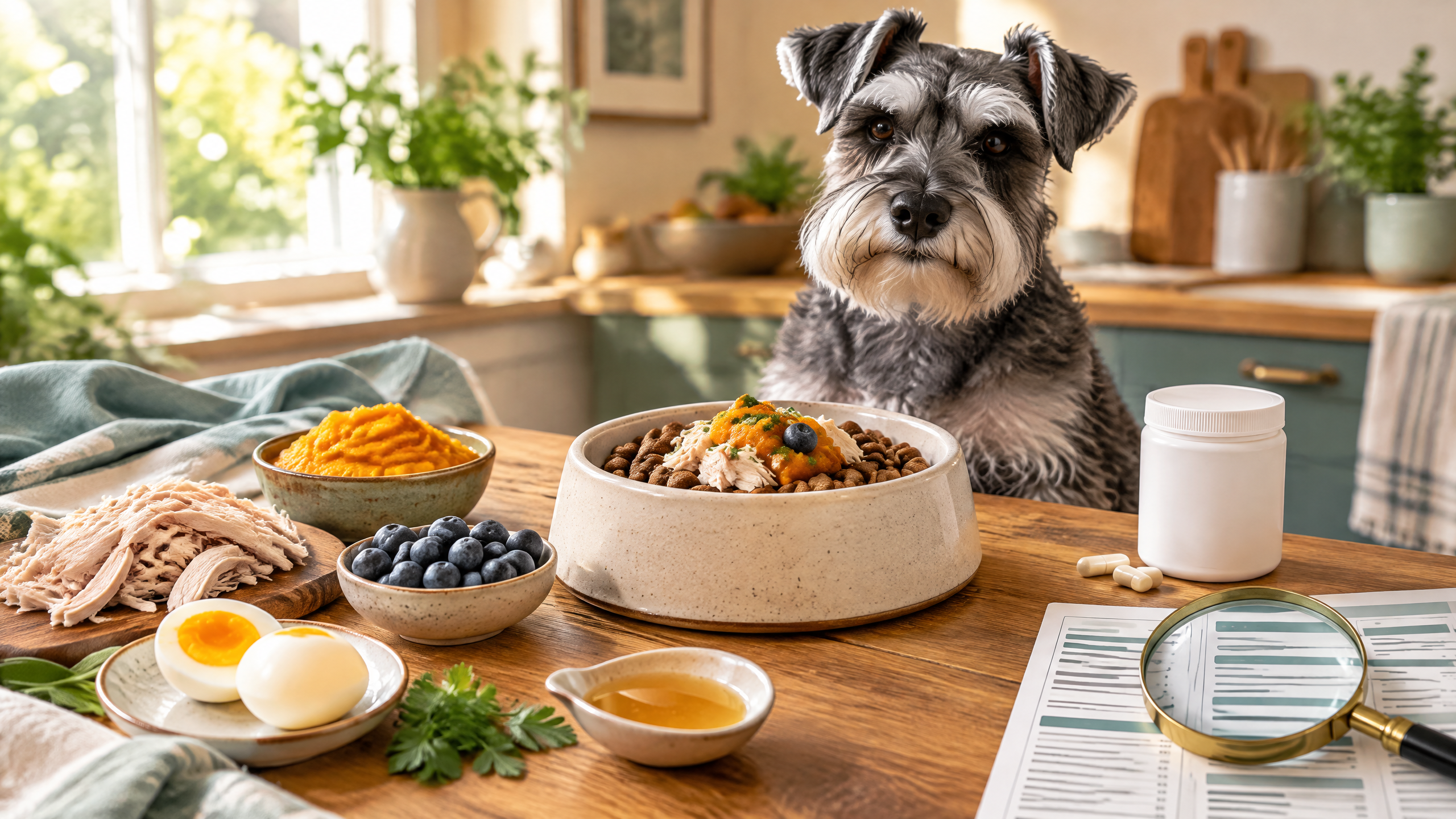
A topper label can tell you exactly how much protein, fat, or collagen is in the bag. What it can't tell you — at least not directly — is how much of that actually gets absorbed and used by your dog's body. That's the single most important idea in this whole topper conversation, and it's the one marketing tends to skip past.
Why Toppers Don't Always Absorb Like the Label Suggests
The guaranteed analysis panel on a bag — crude protein, crude fat, and so on — measures what's chemically present, not what's digestible. "Crude protein" is typically calculated from nitrogen content, and that number doesn't distinguish between highly digestible protein and protein bound up in a form your dog's gut can barely break down.
Two toppers can list identical protein percentages and still deliver very different amounts of usable protein, depending on the source, how it was processed, and how it interacts with everything else in the bowl. This is the core reason a $47 bag and a $12 grocery-store rotation aren't automatically ranked by price — the number on the label is a starting point, not the whole story.
The Nutrient Synergy Myth: How Some Brands Oversell It
"Nutrient synergy" is a real concept — some nutrients genuinely help each other along. Vitamin D helps the body absorb calcium. Vitamin C improves iron absorption from plant sources. These are well-established interactions.
Where it gets stretched is in packaging that lists a "proprietary blend" of ingredients and implies they work together for better absorption, without that specific combination ever being tested. The underlying science of synergy is real; the leap to "this exact blend in this exact bag boosts absorption" is often marketing extrapolating from general nutrition science rather than evidence for that specific product.
Protein Denaturation: Why Cooking Methods Change Everything
Denaturation just means a protein's structure unfolds under heat, acid, or processing — and it happens to some degree in nearly every topper, cooked or freeze-dried. This isn't automatically a bad thing. Moderate cooking generally makes protein easier to digest by unfolding it into a form enzymes can access more easily, which is part of why lightly cooked toppers are often gentler on a senior dog's digestion than raw ones. Ollie (affiliate link) is a good example of this gently-cooked approach done well.
The problem shows up with prolonged high heat, like aggressive extrusion or over-processing. That kind of heat can trigger the Maillard reaction — the same browning reaction that happens on a seared steak — where sugars bind to amino acids like lysine and make them essentially unusable by the body. The protein is still "there" on the label; a meaningful portion of it just isn't usable anymore.
Chicken Meal vs. Real Chicken: What Actually Changes
This is one of the most misunderstood labels in pet food, and it's worth clearing up plainly: chicken meal isn't a lesser ingredient than "real chicken" by default — it's a more concentrated one.
Fresh chicken is roughly 70% water before cooking. Once it's cooked down into a topper or kibble, most of that water disappears anyway. Chicken meal starts as chicken that's already been rendered — cooked down and dried — so it arrives more protein-dense per pound from the start. Named meals (chicken meal, specifically) are regulated ingredients with defined protein and ash content requirements, unlike vague terms like "meat meal" or "poultry by-product meal," which can vary a lot more in quality and source.
What actually matters more than "meal vs. fresh" is:
- Is the source named specifically (chicken meal) or vague (meat meal, animal digest)?
- How was it processed, and at what temperature?
- Where does it rank in the ingredient list relative to fillers?
A well-sourced, named meal can be a perfectly good — even excellent — protein source. The "real chicken always wins" narrative oversimplifies a more nuanced picture.
The Topper Combos That Actually Boost Absorption
Some absorption-boosting pairings are backed by real, well-established nutrition science, not just marketing language:
- Fat + fat-soluble vitamins. Vitamins A, D, E, and K need some dietary fat present to be absorbed. A completely fat-free topper limits how much of these vitamins actually gets used, even if they're technically present.
- Vitamin C + collagen. Vitamin C is a required cofactor for collagen synthesis in the body. Pairing a collagen topper with something that provides a little vitamin C (small amounts of fruits like blueberries, in dog-safe quantities) is a genuinely reasonable combination, not just a trend.
- Prebiotic fiber + probiotics. Probiotic bacteria need something to feed on to survive and establish themselves — that's what prebiotic fiber (found in things like plain pumpkin) provides. A probiotic without any fiber source is working with fewer resources.
These combinations have real biochemistry behind them, which is different from a vague "proprietary synergy blend" claim with no specifics.
Why Collagen Quality Matters
Not all collagen is created equal, and this is a big part of why a $47 collagen topper doesn't automatically outperform a cheaper one — or vice versa. The key distinction is hydrolyzed versus whole collagen.
Hydrolyzed collagen has already been broken down into smaller peptides through a processing step, which means it's absorbed more readily across the gut lining with less digestive work required. Whole collagen (like the collagen naturally present in bone broth or connective tissue) still has to be broken down by your dog's own digestive enzymes before any of it can be absorbed — which is a completely normal process, but a less efficient one, especially for a senior dog whose digestive system may not be working at full capacity.
Neither form is "bad." But if a topper's whole selling point is collagen for joint support, whether it's hydrolyzed is a genuinely useful thing to check, not a minor technicality.
Probiotic Absorption: Why "Contains Probiotics" Isn't the Whole Story
Probiotics face a different absorption challenge entirely — they're not trying to be digested, they're trying to survive digestion. Stomach acid kills a significant portion of probiotic bacteria before they ever reach the intestines where they'd actually do something useful.
A few things that affect whether a probiotic topper is delivering what it claims:
- Guaranteed CFU (colony-forming units) at the end of shelf life, not just at the time of manufacture — potency drops over time, especially with poor storage.
- Strain-specific survivability — some strains are naturally more acid-resistant than others.
- Storage conditions — heat and moisture can kill live cultures before the product is even opened.
A label that simply says "contains probiotics" without a guaranteed CFU count or strain information is giving you far less useful information than it appears to.
Why Expensive Doesn't Mean Better Absorbed
Putting all of this together: price reflects sourcing, processing convenience, packaging, and brand — not necessarily how well a nutrient gets absorbed. A properly cooked egg, for example, has excellent protein bioavailability and costs a few cents. A raw egg, on the other hand, contains avidin in the egg white, which binds biotin and actually blocks its absorption — meaning an expensive, "natural," minimally processed choice can sometimes absorb worse than a cheap, properly prepared one.
The lesson isn't "cheap is always better" or "expensive is always worse." It's that price tells you almost nothing about absorption on its own. The only way to know is to look at the actual form of the nutrient, how it was processed, and what it's paired with.
The Digestive Enzyme Question: Do Senior Dogs Actually Need Them?
Digestive enzyme toppers are marketed heavily toward seniors, on the logic that aging bodies produce fewer enzymes. Here's the honest answer: most healthy senior dogs still produce adequate enzymes on their own, and there isn't strong evidence that supplementing enzymes improves digestion in a dog whose pancreas is functioning normally.
Where enzyme supplementation is genuinely necessary is a diagnosed condition like exocrine pancreatic insufficiency (EPI) — a real, vet-diagnosed condition where the pancreas doesn't produce enough enzymes on its own. For those dogs, enzyme supplementation isn't optional, it's essential. For a dog without that diagnosis, an enzyme topper is a low-risk thing to try but isn't likely to meaningfully change absorption on its own.
Putting This to Work
You don't need a chemistry background to use any of this. A few practical takeaways:
- A high number on the label isn't the finish line — how it was processed and what it's paired with matters just as much.
- Hydrolyzed collagen and guaranteed CFU counts are worth looking for, if joint or gut support is the goal.
- Cooking isn't the enemy — properly cooked, moderate-heat toppers are often more digestible than raw ones, with a few specific exceptions like raw egg white.
- Price is not a proxy for absorption. Check the actual ingredient and processing details instead.
If you want to get comfortable checking these details yourself, our companion guide walks through it step by step. Or skip straight to the numbers.
Check your current bag (free, 30 sec) and see exactly what's guaranteed in what you're already feeding, hydrolyzed or not, before your next topper purchase.
This post is for general information and isn't a substitute for veterinary advice. If your senior dog has a diagnosed digestive or malabsorption condition, work with your vet on what supplementation is actually appropriate rather than relying on general guidance like this.