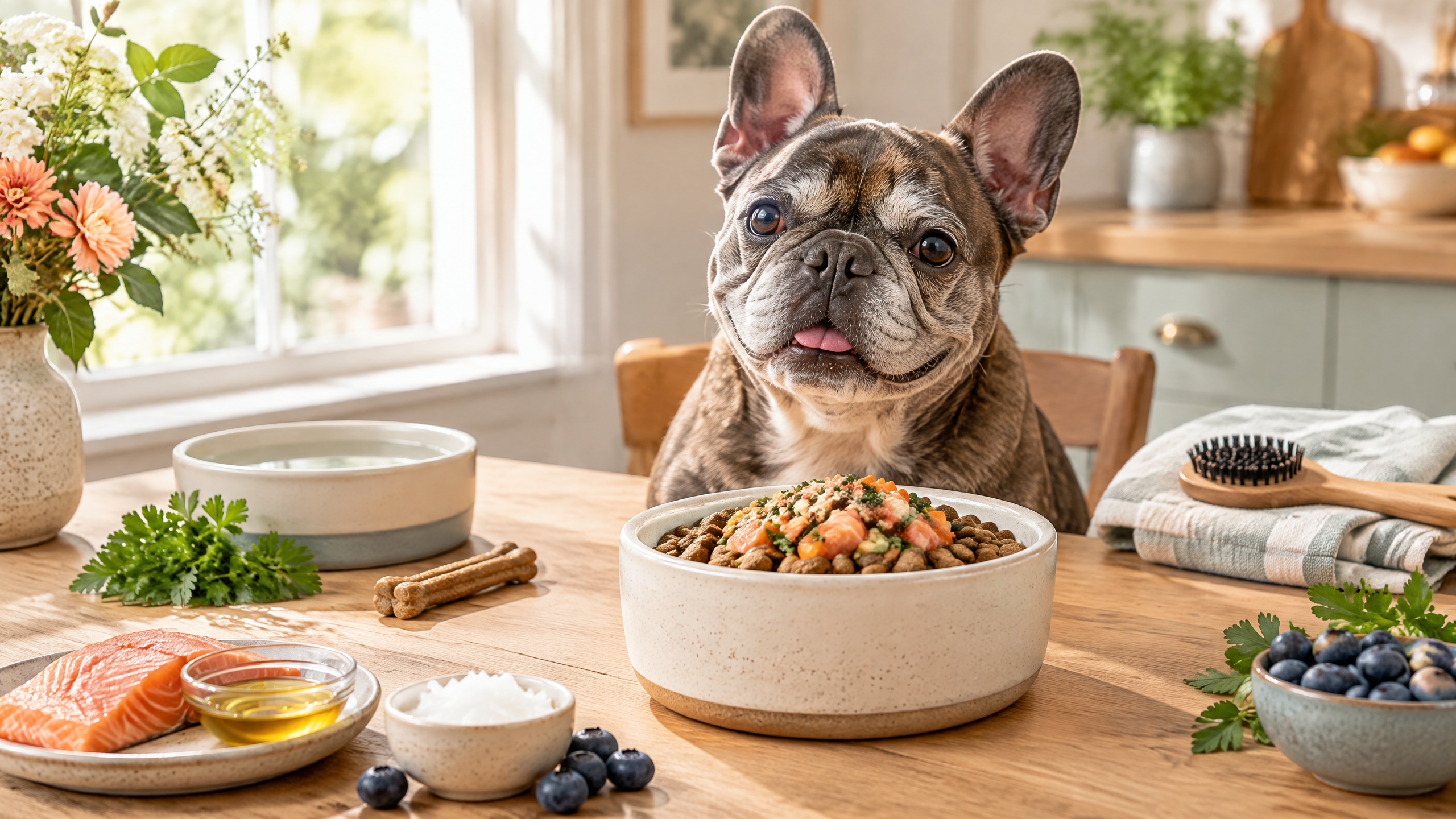
Bad breath, a foggier-seeming mind, dry or flaky skin — these are three of the most common things owners notice as a dog ages, and three of the most common things topper marketing promises to fix. Here's an honest look at what toppers can realistically do for each, and where they stop being enough on their own.
Senior Dog Breath Getting Worse? Here's Why (Before the Topper Talk)
Worsening breath in an older dog is usually a symptom, not a standalone problem. The most common cause by far is periodontal disease — plaque and tartar buildup below the gumline that most dogs develop to some degree by their senior years. Less commonly, a sudden or unusual odor can point to something else entirely: an ammonia-like smell can be associated with kidney disease, and a sweet or fruity smell can be associated with diabetes. Neither of those is something a topper addresses.
For everyday, gradual breath changes tied to normal aging, a few toppers may help modestly:
- A small amount of fresh parsley, finely chopped — a mild, dog-safe breath freshener
- Coconut oil in small amounts — contains lauric acid, which has some antibacterial properties in lab settings, though evidence for meaningfully improving dog breath specifically is limited
- Oral care water additives — enzymatic formulas designed to reduce bacteria in the mouth
None of these address the plaque and tartar actually causing most bad breath. They can help around the edges of an existing dental care routine, not replace one.
How to Freshen Breath Without Daily Brushing
Daily brushing is genuinely the gold standard for dental health, and nothing in a bowl replaces it. But realistically, a lot of owners aren't going to brush a senior dog's teeth every day, so here's what actually helps as a practical middle ground:
- VOHC-accepted dental chews (see below) — mechanical, not a topper, but worth mentioning since they do more than most liquid additives
- Dental water additives, added to the water bowl rather than requiring any handling of the mouth
- Raw carrot or apple slices as an occasional crunchy snack, which provides some mild mechanical cleaning action
If brushing isn't happening at all, these are a reasonable "better than nothing" layer — but regular veterinary dental checkups (and professional cleanings when needed) matter more than any topper or additive.
Toppers That May Support Dental Health (Honest Take)
Here's the honest take: most liquid or powder toppers marketed for "dental health" have thinner evidence behind them than dedicated dental chews do.
The most reliable marker to look for isn't a marketing claim at all — it's the VOHC seal (Veterinary Oral Health Council), an actual independent body that reviews evidence for plaque and tartar control claims on pet products. A product with the VOHC seal has cleared a real evidentiary bar; a topper simply claiming "supports dental health" on the front of the bag usually hasn't been tested to that standard.
That doesn't make dental-support toppers worthless — ingredients like added enzymes can have some effect — but it does mean the claim on the label and the evidence behind it aren't always the same thing.
Cognitive Decline in Senior Dogs: What Toppers Can Realistically Do
This is the topic that deserves the most caution in this whole post. Canine Cognitive Dysfunction (CCD) is a real, vet-diagnosed condition — it looks similar to dementia in humans, with signs like disorientation, disrupted sleep-wake cycles, house-training accidents in a previously trained dog, and reduced interest in interaction.
With that said, there is real, physiologically grounded science behind a few brain-health nutrients:
- MCTs (medium-chain triglycerides), found in coconut oil, can be converted into ketones, which the brain can use as an alternative fuel source when glucose metabolism is impaired — this is the actual mechanism behind some prescription therapeutic diets formulated specifically for CCD.
- DHA (an omega-3 fatty acid) is a structural component of brain tissue and is commonly included in cognitive-support formulations.
- Antioxidants (vitamin E, vitamin C) are thought to help offset oxidative stress, which is believed to play a role in age-related cognitive decline.
The important distinction: prescription therapeutic diets built around these ingredients typically have real clinical trial data behind them. A general grocery-aisle topper containing "MCT oil" hasn't necessarily been tested to that same standard, even if the underlying ingredient has real science behind it elsewhere. If genuine cognitive decline is diagnosed, that's a vet-guided therapeutic diet or medication conversation — a topper is, at most, a minor supporting addition, not the plan.
Skin-Supporting Toppers for Senior Dogs (Honest Take)
Diet genuinely affects skin and coat health, more so than most other things discussed in this cluster. Omega-3 and omega-6 fatty acids support the skin's natural barrier function, and a deficiency in either can show up as dryness, flakiness, or a dull coat. Zinc and biotin are also commonly included in skin-support formulations.
One relevant callback: biotin's usefulness can be undermined by one specific mistake — raw egg white contains avidin, which binds biotin and blocks its absorption. If you're adding eggs as part of a skin-support routine, cooking them avoids this problem entirely.
The honest caveat here is an important one: persistent itching, hot spots, hair loss, or recurring skin infections usually have an underlying cause that a topper won't fix — allergies (food or environmental), external parasites, or an endocrine issue like hypothyroidism are all common culprits in senior dogs. A skin-support topper is a reasonable thing to try for mild, general dullness. It's not the right first move for a dog with an active skin problem that needs a diagnosis.
Are These Specialty Toppers Worth It?
Cognitive, dental, and skin-support toppers tend to sit toward the pricier end of the topper category, often trading on the seriousness of what they're targeting. Before committing to one long-term, it's worth asking the same honest question this whole series keeps coming back to: are these toppers worth it compared to addressing the underlying issue directly, whether that's a dental cleaning, a vet workup for skin symptoms, or a cognitive assessment.
And because specialty claims are exactly the kind of thing that can outpace the evidence, it's worth understanding why these toppers might not work as well as the label suggests, even when the core ingredient (MCTs, omega-3s, enzymes) has real science behind it in general.
See what your dog's base food already provides before adding a specialty topper on top of it.
Check your current bag (free, 30 sec) →The Bottom Line
Breath, dental health, cognition, and skin all genuinely respond to diet to some degree — none of this is snake oil territory. But in every one of these categories, a topper is a supporting player, not a treatment. Persistent bad breath, real dental disease, possible cognitive decline, and ongoing skin problems all deserve an actual diagnosis from your vet. A well-chosen topper can be a reasonable, low-risk addition alongside that care — not a substitute for it.
This post is for general information and isn't a substitute for veterinary advice. Sudden or severe bad breath, signs of disorientation or behavior change, and persistent skin issues all warrant a veterinary visit rather than a topper-first approach.